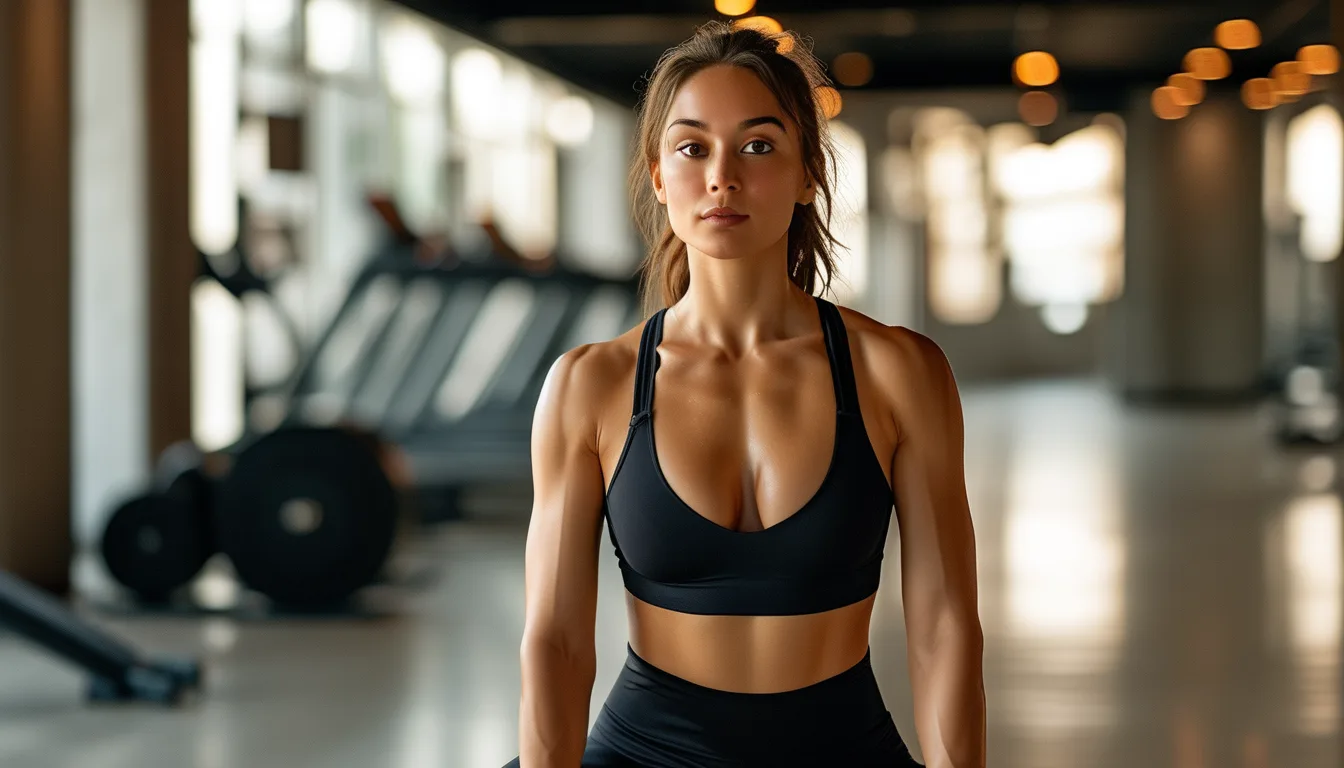
5 Squat-Proof Looks for Cooler Studio Days
Quick Answer: In cooler studios, opacity gets slightly harder — elastane stiffens in the cold, so the same legging stretches less evenly and thins more at the point of greatest load. The fix across all five looks below is the same: heavier full-length bottoms in the 250 to 320 gsm range, plus an upper layer you can shed. Every combination here is built so the base stays opaque under a full squat and the layer comes off without disturbing anything.
The studio is ten degrees cooler than it was three weeks ago, your summer set is now the wrong weight, and you have not got around to changing it.
Here are five combinations that solve the transition, each built around a bottom that holds up under load and a top layer that comes off in the first ten minutes. Every look assumes the same test: full squat, facing away from the mirror, checked before it leaves the house.
Look 1: The dark full-length base
The core of the transition wardrobe, and the one to buy first if you buy only one thing.
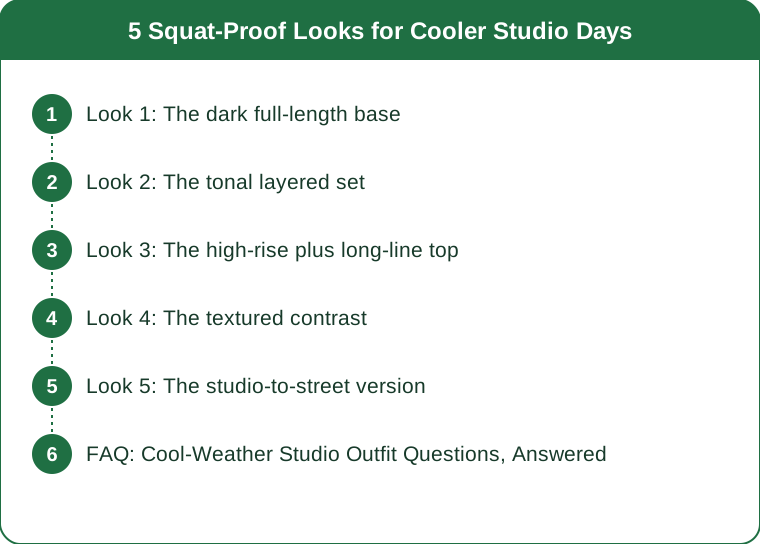
A heavyweight full-length legging in black or a deep neutral — charcoal, deep navy, espresso — with a wide high-rise waistband and a seat panel you have already tested. Paired with a fitted long-sleeve base layer in a matching or tonal shade, and a cropped sports bra underneath.
Why it works in a cold studio: full length covers the calf and ankle, which is where most of the heat is lost sitting on a cold floor. The long-sleeve base is thin enough to train in and warm enough for the first fifteen minutes, and it can be pushed up rather than removed.
The detail that matters: choose a legging with a bonded or flatlock seam construction and check the seat panel under a bright light before the first wear. Dark colors hide thinning better than light ones, which makes them the safer default when you are less sure about a new pair — but they are not immune, so test anyway.
Skip: lightweight summer leggings in this role. At 180 gsm they are both too cold and less reliable under stretch.
Look 2: The tonal layered set
For studios that stay cool throughout, or classes that start slow.
Matched legging and sports bra in the same colorway, with an unzipped lightweight quarter-zip or a cropped sweatshirt over the top. The set underneath is what you train in; the layer is what you arrive in.
Why it works: a matched set reads as deliberate rather than assembled, so the top layer coming off mid-class does not leave you looking half-dressed. Tonal dressing also visually lengthens the line, which is the reason it photographs well and the reason people keep coming back to it.
The detail that matters: the layer should be genuinely easy to remove — a quarter-zip or a wide-neck crop, not something you have to wrestle over your head mid-flow. Anything you have to fight with tends to stay on, which defeats the purpose.
Fabric note: a cropped sweatshirt in a brushed-back fabric is warmer than it looks and takes up almost no bag space when it comes off.
Look 3: The high-rise plus long-line top
The most forgiving combination, and the one to reach for when you are unsure about a legging.
High-rise heavyweight leggings with a long-line tank or a tunic-length tee that covers the seat. The top layer is doing double duty: coverage over the area you are least confident about, and a bit of extra warmth across the hips.
Why it works: it removes the anxiety entirely. There is a real performance argument here too — people move differently when they are thinking about whether their leggings are holding up, and removing that thought changes how you train.
The detail that matters: long-line tops need enough drape not to cling. A slightly heavier modal or cotton-blend fabric hangs properly; a very light synthetic will static-cling to the leggings in dry autumn air and end up sitting exactly where you did not want it.
Bag note: this is the combination that works for the walk in and the walk home too, which makes it the practical choice for days you are going somewhere afterwards.
Look 4: The textured contrast
For when the whole thing has started to feel like a uniform.
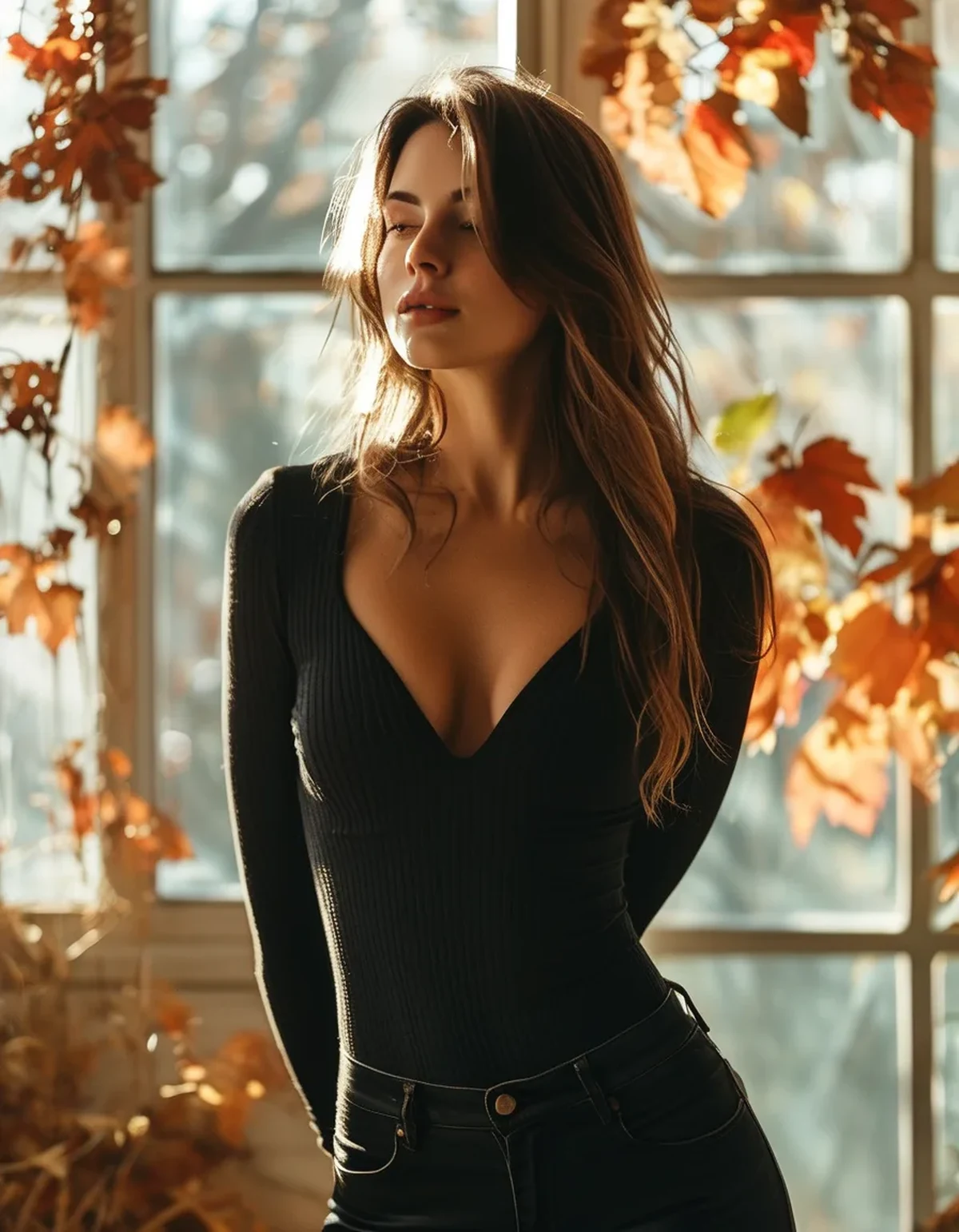
Smooth heavyweight leggings paired with a textured upper layer — ribbed, waffle, or a brushed knit. The contrast in surface does the visual work that a print would do, without the print, and ribbed fabrics have the practical advantage of holding warmth better than flat knits.
Why it works: texture reads as considered in a way that color-matching alone does not, and it is the easiest way to make a small activewear wardrobe look larger than it is.
The detail that matters: keep the texture on top and the smooth fabric on the bottom, not the reverse. Textured or ribbed leggings stretch unevenly across the seat — the ribs open up under load — which is exactly the opacity problem you are trying to avoid.
Color note: as the light changes through autumn, warmer neutrals — clay, olive, bone — read better than the bright colors that worked in July, without going entirely to black.
Look 5: The studio-to-street version
For the class you go to on the way to something else.
Heavyweight black leggings, a simple fitted top, and an oversized shirt or unstructured jacket as the outer layer, with proper shoes rather than trainers in the bag.
Why it works: the outer layer is the entire transition. Everything underneath stays activewear; the jacket and the shoe swap do the work of making it read as an outfit. This is the least effort for the largest visual change, which is why it is the formula that survives.
The detail that matters: the jacket has to be a real jacket rather than a technical layer. A structured shirt, a denim jacket, or an unstructured blazer changes the register; a running windbreaker does not, no matter how good it looks.
The practical bit: keep the shoe swap and a small pouch in one bag rather than two. Carrying a second bag defeats the entire point, and it is the most common reason people abandon this approach after two weeks.
FAQ: Cool-Weather Studio Outfit Questions, Answered
Do leggings really behave differently in a cold studio?
Somewhat. Elastane is temperature-sensitive and becomes slightly stiffer when cold, which means the fabric distributes stretch a little less evenly under load. In practice it means a pair that was marginal in a warm room is more likely to fail in a cold one, so it is worth re-testing borderline pairs when the season turns rather than assuming last summer’s verdict still holds.
What weight should I actually be looking for?
Around 250 to 320 gsm for reliable opacity in a full squat. Very few brands publish this number, so the practical substitute is the light test — stretch a single layer between your hands to squat-depth tension and hold it up to a light. If the light source is clearly visible through it, it will not hold up.
How many layers do I actually need for the transition?
Two on top and one on the bottom. A base you can train in, a layer that comes off, and full-length bottoms. Adding more usually means carrying things you never take off. The layering pieces do not need to be one per session either — two of them cover a whole week, since they sit over the sweaty layer rather than against your skin.
TL;DR:
- Cool studios make opacity slightly harder — retest borderline leggings when the season turns.
- Build every look on a heavyweight full-length bottom, 250 to 320 gsm, with a tested seat panel.
- Five that work: dark full-length base, tonal layered set, high-rise plus long-line top, textured contrast, studio-to-street with a real jacket.
- Two upper layers cover a full week; only the base layer needs to be one per session.
Swap the summer set out this week rather than in the first genuinely cold class. That class is not the moment to discover the problem.
See It in Motion
Seen here: Round Neck Long Sleeve Athletic T-Shirt — shop it on bubblelime.com
Keep Reading
This article is for general informational and styling purposes only. Fit, sizing, and product availability may vary.