Are Light-Colored Leggings Ever Squat-Proof? The Honest Answer
Quick Answer: Opacity is determined by knit density, fabric weight, and yarn opacity — not by color. But color changes how visible any given level of sheerness is: light fabrics show less contrast against most skin tones in some cases and far more in others, and they reveal underwear lines and seams much more readily. A light pair can absolutely be squat-proof if it is 250 gsm or heavier with a dense double-knit and a gusset. The test is always the same: bend fully in front of a mirror, in bright light, and look.
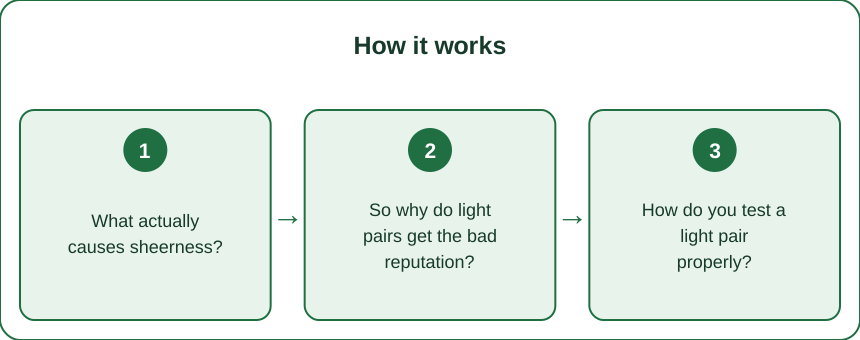
What actually causes sheerness?
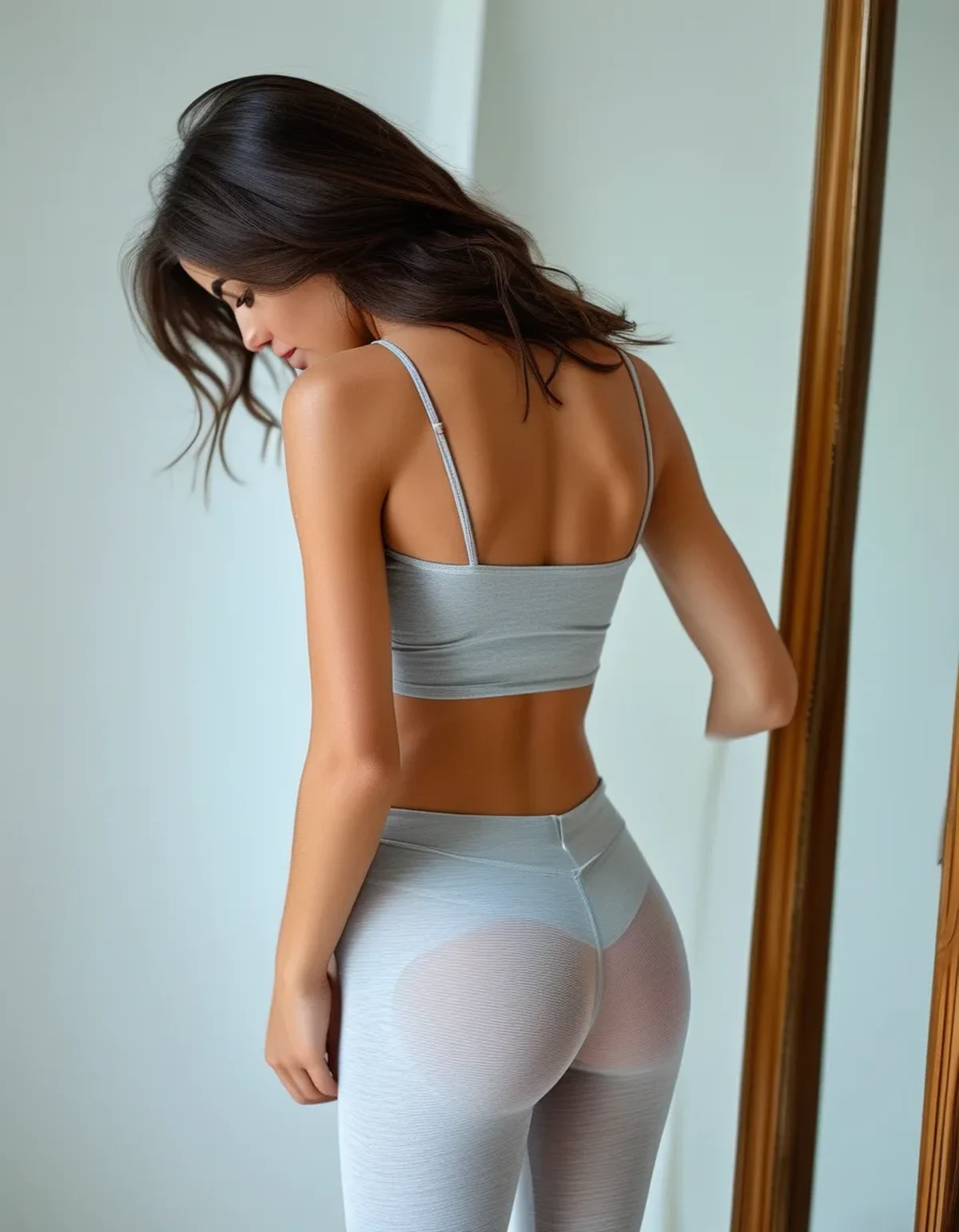
Stretch reduces material per square inch. When you squat, the fabric across your seat and thighs stretches by 20 to 40 percent. The same amount of yarn now covers a larger area, so there is physically less material between light and skin. This is the entire mechanism.
Knit density determines the starting point. A dense knit has more yarn to begin with, so even stretched it retains coverage. An open knit runs out fast.
Fabric weight correlates closely with density and is the easiest proxy. Below about 220 gsm, opacity under full stretch becomes unreliable. 250 gsm and above is generally safe.
Yarn opacity matters independently. Some filament yarns are more translucent than others regardless of how densely they are knit. This is where cheap fabric fails despite adequate weight — the yarn itself passes light.
Double-knit construction — two layers knit together — is dramatically more opaque than single-knit at similar weight, and it is common in the pairs that genuinely pass.
None of these is color. Color is a dye applied to a structure, and the structure is what does the work.
So why do light pairs get the bad reputation?
Because color changes what you notice, in three distinct ways.
Contrast with skin. Sheerness becomes visible as a shadow or a tonal shift. A light fabric over deeper skin creates high contrast and shows sheerness dramatically. A light fabric over similar-toned skin shows it far less. This varies by person, which is why experiences differ so widely.
Underwear visibility. This is the biggest practical factor and it has nothing to do with sheerness. A light legging shows the edges, color, and texture of anything underneath, even when the fabric is completely opaque. People frequently read this as the legging being see-through when it is not.
Seam and construction visibility. Gusset seams, panel edges, and pocket linings all show through light fabric as tonal variations. Again, not sheerness — but it looks like it.
The practical result: a light pair needs to clear a higher bar than a dark pair to look right, even at identical opacity. That is a real consideration when buying, and it is why brands often use heavier fabric for their light colorways — the good ones, at least.
So the reputation is earned in outcome, but the cause is not what most people think.
How do you test a light pair properly?
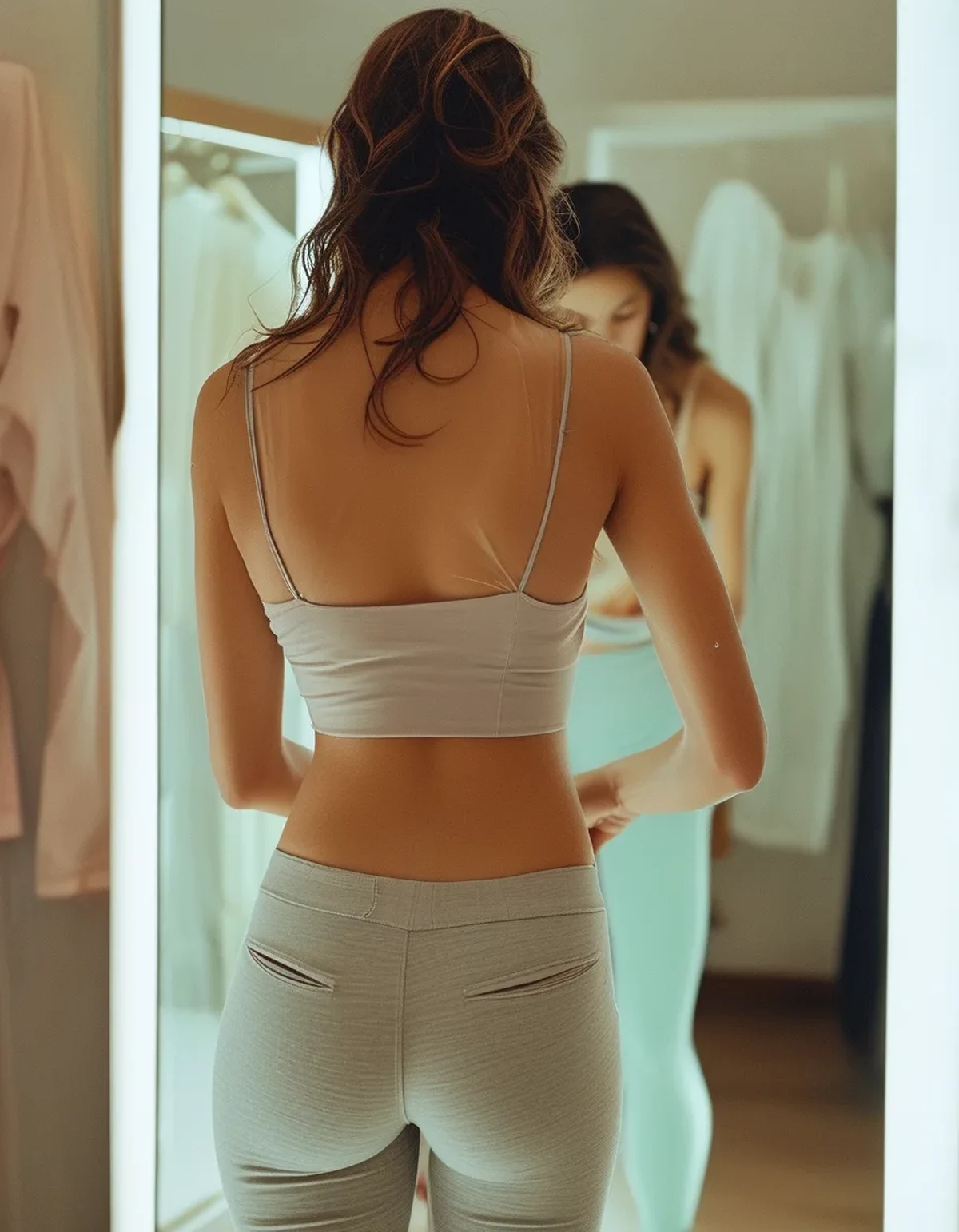
Bright light, mirror, full bend. Not a half squat. Go all the way down, and look at the seat and the back of the thigh — those are the two highest-stretch zones.
Use a phone camera if you can. A photo taken from behind, in good light, shows what other people see and removes the awkward mirror angle. It is the single most reliable version of this test.
Test with the underwear you will actually wear. Seamless in a matching tone is the fair test. A dark or contrasting pair will show through a light legging regardless of fabric quality, so testing with those tells you nothing about the legging.
Check under different light. Bright outdoor daylight is far less forgiving than a store fitting room, and it is where anyone will actually see you. If possible, check near a window.
Do the pinch test on the hanger before you even try them on: stretch the fabric widthwise between your hands and hold it up to a light. Light passing through easily is a fail. This takes five seconds and screens out most bad pairs.
Retest after a few washes. Fabric that loses recovery covers less when stretched. A pair that passed when new can fail at six months, and that is worth knowing before it happens in a class.
Myth vs Fact: Squat-Proof and Color
Myth: Black is always squat-proof. Fact: Thin black leggings go sheer just as readily. The difference is that low-contrast sheerness on black is less visible — which means you may not notice until someone else does.
Myth: Light colors are never squat-proof. Fact: A 250-plus gsm double-knit in cream or sand can be completely opaque. They exist and they are increasingly common; they just cost more to make.
Myth: Thicker always means hotter. Fact: Density and breathability are related but not identical. A dense flat-knit nylon breathes better than a lighter brushed polyester.
Myth: If it is opaque standing, it is opaque squatting. Fact: Standing tells you nothing. The entire question is what happens at 30 percent stretch.
Myth: Wearing nude underwear solves everything. Fact: It solves visibility of the underwear, which is a genuine and common issue. It does not add opacity to the legging itself.
FAQ: Light-Colored Legging Questions, Answered
What gsm should I look for in a light pair?
250 gsm or above, and ideally a double-knit. If the brand does not list gsm, look for words like sculpt, contour, or full-coverage, which usually indicate a heavier fabric.
Do light leggings get more see-through as they age?
Yes, faster than dark ones show it. Loss of recovery means more stretch at the same movement, and light fabric reveals it sooner. Rotate and air dry to slow it down.
Is a gusset relevant to opacity?
Indirectly and importantly. A gusset reduces tension at the crotch, so the surrounding fabric stretches less. It also adds a fabric layer in the most scrutinized area.
What underwear works under light leggings?
Seamless briefs in a tone close to your skin, or a thong if edges bother you. Avoid contrasting colors and lace, both of which show through opaque fabric as clearly as through sheer.
TL;DR:
- Opacity comes from knit density, weight, and yarn — not from color.
- Light pairs show underwear lines and seams more, which people often mistake for sheerness.
- Look for 250 gsm or heavier, double-knit, with a gusset.
- Test with a full squat, in bright light, photographed from behind, wearing the underwear you’d actually wear.
- Retest after a few months — recovery loss makes older pairs sheerer.
Light-colored squat-proof leggings are real. They just require you to check the fabric spec instead of trusting the color.
See It in Motion
Seen here: High Waist Embossed Yoga Leggings with Side Pockets — shop it on bubblelime.com
Keep Reading
This article is for general informational and styling purposes only. Fit, sizing, and product availability may vary.