How to Squat-Test Leggings at Home Before You Ever Wear Them Out
Quick Answer: Test leggings by squatting in front of a mirror in direct natural daylight — not overhead store lighting — while wearing patterned or contrasting underwear, and hold the bottom of the squat for a full 10 seconds rather than bouncing through it. Sheerness shows up under sustained stretch and bright side-lighting, which is exactly the combination a fitting room is designed to avoid giving you.
Most sheerness disasters happen because the store test and the real-world conditions are nothing alike. Reproducing real conditions at home takes about two minutes and saves the pair you can never quite trust.
Why do fitting room mirrors miss sheerness so consistently?
Fitting rooms use overhead lighting almost universally, and overhead light hits the top of your thigh rather than passing through the fabric at the back. Sheerness is a transmission problem — you see it when light comes from behind or the side and passes through the stretched knit. Top-down light simply doesn’t create that condition.
Many fitting rooms also use warm, diffused bulbs specifically because they’re flattering, which further softens exactly the contrast you’re trying to detect. It isn’t a conspiracy so much as lighting designed for a different goal than the one you have.
What does the actual home test look like, step by step?
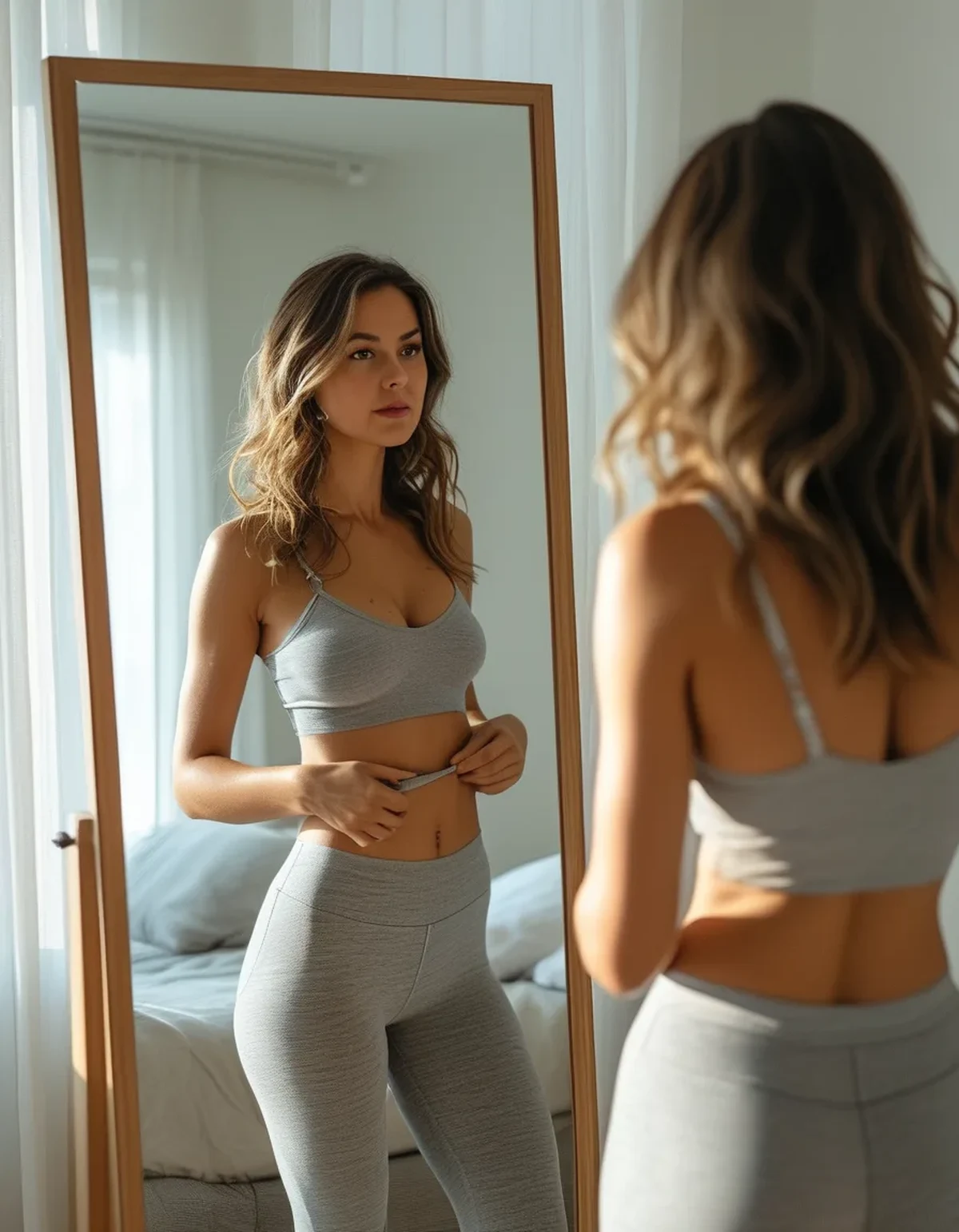
Stand in front of a full-length mirror with a window to your side, in daylight, with no overhead light on. Wear underwear in a contrasting color or a visible pattern — this is the single highest-value part of the test, because nude-on-nude hides everything.
Then squat down slowly and hold the bottom position for a full 10 seconds while looking over your shoulder at the mirror. Ten seconds matters: fabric continues to thin under sustained stretch, and a quick bounce-squat can pass a pair that fails in a real workout. Finish by lunging forward on each leg and checking the front thigh, which is where thin knits often fail second.
Which specific areas fail first?
The seat and the back of the upper thigh fail first in nearly every case, because that’s where the fabric stretches across the widest curve. If a pair is going to go sheer, it starts there.
The second most common failure zone is the front of the thigh in a deep lunge, which catches pairs that pass a squat but not full range of motion. The third is the area right below the waistband on high-rise pairs, where the fabric is often stretched hardest to hold the waistband in place. Check all three — passing one doesn’t predict the others.

Do color and fabric weight predict opacity reliably?
Only partially, and relying on them causes most bad purchases. Black is meaningfully more forgiving than light colors, but a thin black pair still goes sheer under stretch — it just needs slightly harsher light to reveal it. Light grays, especially heathered ones, are the least forgiving because the base fabric is lighter and the heathering adds visual thinness.
Fabric weight is a better predictor but still imperfect. A higher spandex percentage generally holds opacity better under stretch because the fibers recover rather than thinning out, but construction — knit density, whether panels are doubled at the seat — matters just as much as the number on the tag.
What Nobody Tells You About Squat-Proofing
Opacity changes over the life of the garment. A pair that passes on day one can fail at month eight, because repeated stretching gradually breaks down elastane fibers and the knit never fully recovers. Re-testing your rotation once or twice a year catches this before it catches you.
Washing habits accelerate it. Hot water and high-heat drying degrade elastane faster than anything else you do to leggings. Cold wash and air-dry genuinely extends the squat-proof window.
Sizing down makes it worse, not better. A tighter pair stretches the knit further, which thins the fabric more. If a pair is borderline sheer, going up a size often solves it outright.
FAQ: Squat-Proof Testing Questions, Answered
Can I do this test with a phone camera instead of a mirror?
Yes, and it’s arguably better — record a short video from behind while you squat, since you can review it without twisting your torso, which distorts the fabric.
Does the test work the same for light-colored leggings?
Same method, but expect a lower pass rate. Light colors need higher knit density to reach the same opacity, so hold them to the same 10-second standard rather than grading on a curve.
If a pair fails, is there any way to salvage it?
As a layering piece under a dress or a longer tunic, absolutely. As a standalone gym pair, no — the fabric won’t get denser with wear.
TL;DR:
- Test in daylight with a side window, not under overhead store lighting
- Wear contrasting or patterned underwear so sheerness has something to reveal
- Hold the bottom of a squat for 10 full seconds — bouncing through it hides failures
- Check the seat, the front thigh in a lunge, and below the waistband separately
Two minutes of testing under honest lighting tells you more than any fitting room will. Do it before the tags come off, and re-test your favorites once a year.
See It in Motion
Seen here: High Waist Yoga Leggings with Side Pockets — shop it on bubblelime.com
Keep Reading
This article is for general informational and styling purposes only. Fit, sizing, and product availability may vary.